
The shopper who walks past the designer handbag but picks up a lip balm, a collectable figure and a gift for themselves is quietly rewriting retail property. Newmark's 2026 Retail Vitality Rankings assess 1,000 UK locations on shopper spend, vacancy, demographics, hospitality provision and health, beauty and gifting floorspace. They show value-conscious consumers trading big-ticket purchases for smaller luxuries, and the landlords who understand that are winning.
The winners are not who you might expect. Cambridge City Centre kept the top spot for the second year running, ahead of King's Road in Chelsea and Manchester, which climbed nine places to third. Edinburgh rose ten places to fifth, Glasgow 20 to 11th and Birmingham 22 to 24th, and six city centres now sit in the top 10. City centres improved by a combined 62 places on 2025, while large towns gained 59 on average. Braehead Shopping Centre and Livingston leapt 213 and 254 places amid investment in beauty, gifting, lifestyle and leisure. London still dominates, with 60 locations in the national top 250 and West End shopper spend estimated at €21bn a year, against about €6.3bn in Glasgow, €5.3bn in Birmingham and €5bn in Manchester.
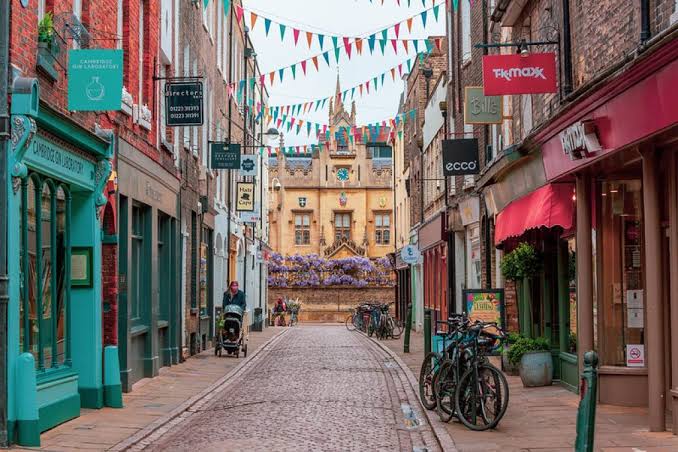
Cambridge City Centre, ranked #1 in Retail Vitality
Newmark's experts describe a more selective market. "Consumers remain careful about where they spend, but we continue to see a strong appetite for smaller purchases that feel like a treat. Beauty, gifting and collectables can offer that sense of indulgence without requiring a major purchase, while health and wellness continues to occupy a growing role in people's everyday lives. The rise of major regional cities alongside the continued strength of London shows that consumers and retailers are gravitating towards destinations that offer scale, choice and experience." said David Harper, managing partner and head of UK retail at Newmark. Andy Metherell, head of consultancy and analytics, added: "Retail vitality is never driven by a single category or trend. What we are seeing is a more selective market, both from consumers and from occupiers. The strongest destinations are responding to changing consumer habits by offering a mix that gives people more reasons to visit. Beauty, gifting, wellness, food and beverage and entertainment are increasingly part of that mix, alongside a strong core retail offer." Brands such as MINISO, Pop Mart and PURESEOUL are riding demand for products that are discoverable, giftable and easy to share online, while Korean beauty is pushing wellness brands into larger units.
The data is British, but the drivers are not. Squeezed households, social-media product discovery and a hunger for experience are shaping spending in every large European market.
Our view is that three things follow. First, scale will win: dominant city-centre and large-town destinations that pair flagships with a day-to-evening offer should outperform secondary pitches with no anchor.
Second, beauty, gifting, collectables and wellness operators will take bigger units and compete harder for prime space in Paris, Milan, Madrid and Berlin, as they already do in London. Third, North American and Asian brands will keep using flagship capitals as their way into the continent. Newmark already sees SKIMS, KITH, Raising Cane's, Garage and Restoration Hardware squeezing availability and lifting rents on Oxford Street, Regent Street, Bond Street, Covent Garden, Marylebone High Street and King's Road.
What the research leaves unsaid matters to investors and developers. The rankings measure vitality, not rents, yields or lease terms, so they do not show whether trend-led tenants can afford the prime rents they are bidding up. Brands built on collectables and viral products can rise quickly and fade quickly, and covenant strength, lease length and break options are not discussed. Nor does the research compare UK locations with continental ones, so Europe-wide conclusions are inference rather than data. Underwriting will need to look harder at rent-to-sales ratios, turnover-linked rents and how many of the new entrants are flagship statements rather than roll-out strategies.
What is needed is curation and flexibility. Landlords should build tenant mixes around dwell time, with food and beverage, wellness and entertainment alongside a strong core retail offer. They should also offer units that can grow or shrink with a brand, and leases that share risk with occupiers on both sides. Transport hubs show another route. Clapham Junction rose six places to 27th, London Bridge seven to 33rd and King's Cross stays in the top 30, as locations that combine heavy footfall with growing residential and worker populations. Continental station districts and mixed-use schemes with homes above and retail below could follow the same script.
While Newmark's data concentrates on the UK, broader European metrics suggest the shift toward treat-led spending is a cross-border phenomenon. Deloitte's European consumer sentiment research, including its Consumer Tracker, has repeatedly found that more than two-thirds of households feel under financial pressure and are value-conscious. Yet discretionary demand appears to have shifted selectively toward small-ticket "micro-luxuries" like blind-box collectibles, niche cosmetics and gourmet gifting. This structural shift is reflected in the rapid footprint growth of Asian and North American experiential brands across mainland capitals, where affordable indulgence is actively absorbing prime high-street real estate previously dominated by middle-market fashion.
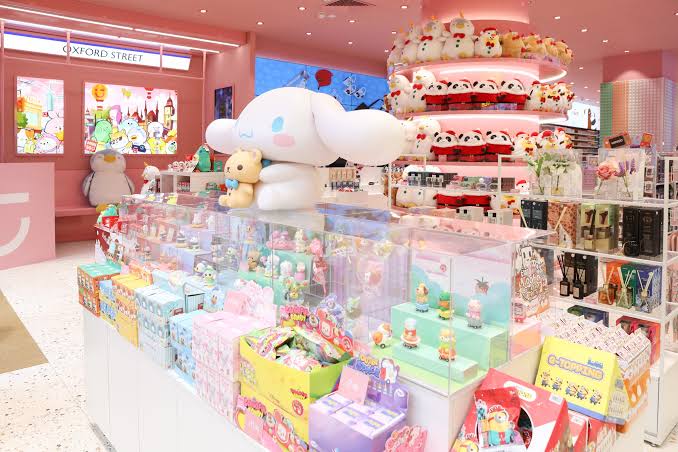
MINISO’s experiential lifestyle retail offer
On the ground in mainland Europe, Asian retail powerhouses MINISO and Pop Mart are leading the charge by securing prime pitches in major fashion capitals. MINISO's largest German store on Dusseldorf's Flinger Strasse and its stores in central Milan, alongside Pop Mart's flagship presence on Boulevard Haussmann in Paris, highlight how collectible toys and lifestyle accessories are competing directly for top-tier footfall. Meanwhile, North American lifestyle and beauty brands are mimicking this strategy on the continent: SKIMS and KITH continue to leverage Parisian and Milanese pop-ups and flagships to capture high-density tourist spend, while K-beauty concepts are scaling into larger high-street footprints across Berlin and Amsterdam to capture Gen Z social-commerce demand.
People mentioned
- David Harper, Managing Partner, Head of UK Retail, Newmark
- Andy Metherell, Head of Consultancy and Analytics, Newmark
Pop Mart flagship store display. Image Source: Oxford Street
MINISO's experiential lifestyle retail offer. Image Source: Facebook
Cambridge City Centre, ranked #1 in Retail Vitality. Image Source: Visit Cambridge
Companies mentioned
- Newmark, global commercial real estate advisor and publisher of the 2026 Retail Vitality Rankings
- MINISO, retail brand cited as tapping demand for affordable indulgence
- Pop Mart, collectables brand cited as tapping demand for affordable indulgence
- PURESEOUL, retail brand cited as tapping demand for affordable indulgence
- SKIMS, North American brand and recent UK/European entrant
- KITH, North American brand and recent UK/European entrant
- Raising Cane's, North American restaurant brand and recent UK entrant
- Garage, Canadian fashion brand and recent UK entrant
- Restoration Hardware, North American home furnishings brand and recent UK entrant
- Deloitte, professional services firm and source of European consumer sentiment research