Economic Overview
Georgia has been one of the fastest-growing economies in the region. Real GDP expanded by 7.5% in 2025, after 9.5% in 2024, 7.8% in 2023 and 10.4% in 2022. In June 2026 the International Monetary Fund projected growth of 6.5% for 2026, easing towards a medium-term potential of 5% by 2028, assuming the Middle East conflict ends soon. It also noted public debt below 35% of GDP and a current account deficit at a historic low of 2.6% of GDP.
Inflation is the pressure point. It reached 5.9% in April 2026 on higher energy prices, and the IMF expects it to stay above the National Bank of Georgia's target until mid-2027. Forecasters are not aligned: the World Bank cut its 2026 growth outlook to 5% in June, while the EBRD raised its own to 6%.
Airport expansion plans
Infrastructure and Connectivity
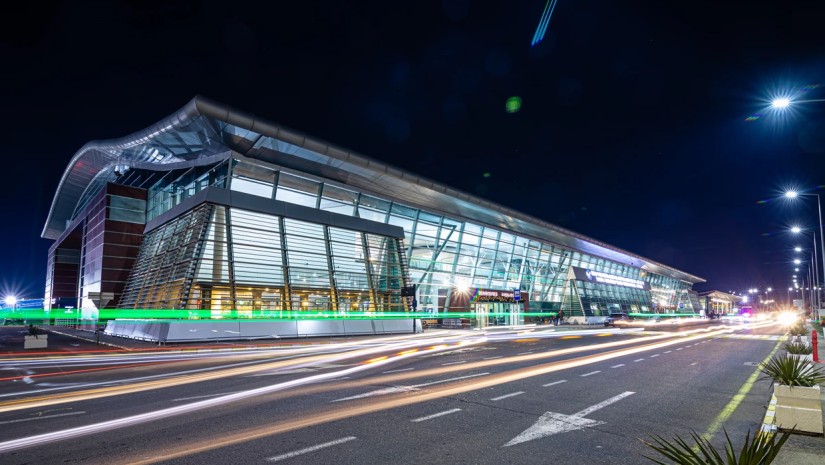
Tbilisi International Airport served more than 5.4 million passengers in 2025, close to its design capacity. TAV Georgia has begun a project worth more than US$150m (about €130m) to double capacity to 10 million passengers a year, due for completion between 2026 and 2028. A new international airport at Vaziani is planned, and the Anaklia Deep Sea Port is now expected to receive its first vessels in 2029. A Georgian deputy minister says the country aims to mobilise around €6bn for transport infrastructure by 2032, much of it tied to the Middle Corridor linking China and Central Asia with Europe.
Within the city, a new tram line project is moving forward. Investors should note that several of these schemes have slipped before, and local analysts have questioned when some will materialise.
The Residential Market: Demand and Pricing
According to Galt & Taggart, Tbilisi registered 27,274 residential transactions worth US$2.5bn (about €2.2bn) between January and July 2026, up 27.3% year on year. Primary market prices reached about US$1,426 per m² (around €1,230) in July, rising at a moderate pace. The average 50 to 60 m² apartment rented for about US$10.1 per m² a month (around €8.7), which Galt & Taggart puts at a gross rental yield of roughly 8.5%.
The picture needs context. Galt & Taggart notes that part of the early-2026 growth reflects a low base after political instability weakened sales in 2025, and TBC Capital forecasts average price growth of only around 3.2% in Tbilisi this year. Buyers are mostly local: Georgians accounted for about 77% of primary sales among surveyed developers, with Israeli and Russian buyers at roughly 10% and 3%. On the supply side, permitted residential area fell 44.7% year on year in February and 18.4% in May before picking up in July.
Market participants add a structural argument, which we have not independently verified. They say 78% of Tbilisi's homes were built 50 to 60 years ago in the Soviet era, with an original design life of around 40 years, creating deep replacement demand.
Branded Residences: A Market Built from Scratch
Georgia's most striking statistic comes from The Brand Standard, the inaugural annual report from Global Branded Residences. Georgia has 23 branded residential schemes, every one yet to complete, giving it the second-largest pipeline in Europe behind Spain. Batumi alone has 12, with others in Tbilisi, Borjomi, Gudauri and Kobuleti. International hotel brands account for 22 of the 23 schemes, among them Radisson Blu, Swissotel, Wyndham, Pullman, Novotel and Mercure. Europe as a whole has 338 schemes, of which 199 are in the pipeline.
"What is particularly striking about Georgia is the speed at which that is happening. To have 23 projects in the pipeline before the first scheme has completed is significant and reflects how quickly international hotel brands and developers are moving into destinations where they see strong tourism, second-home and investment demand." said Riyan Itani, founder of Global Branded Residences. Savills had already forecast that the concept would reach Georgia among 25 new countries by 2032.
Central Towers

Hospitality and Tourism: Record Performance
Georgia welcomed a record 5.5 million tourist visits in 2025, up 8.4%, within 7.8 million international traveller entries. Tourism revenue reached US$4.7bn (about €4.0bn). Tbilisi attracted 3.8 million visits, and visits from the EU and the United Kingdom rose 14% to almost 500,000. Spending per visit dipped slightly, so growth is coming from volume, and revenue from Russian visitors fell as longer-stay visitors were replaced by short-stay ones.
Investment Drivers and Market Outlook
Several factors support Tbilisi as an emerging residential and living-sector destination:
Economic Momentum: Growth of 5% to 6.5% a year, low public debt and a narrowing current account deficit underpin demand.
Structural Housing Demand: An ageing Soviet-era stock points to long-term replacement demand, subject to verification of the underlying data.
Yield Advantage: A gross rental yield of around 8.5% is well above that of most Western European residential markets.
Connectivity: Airport expansion, the planned Vaziani airport and Anaklia port strengthen Tbilisi's role as a regional hub.
Brand and Operator Interest: International hotel groups are committing to branded residential schemes before the first has opened.
Risks and Considerations
Political risk is the central issue. S&P Global affirmed Georgia at BB with a stable outlook in February 2026 but cited political polarisation and complex relations with the United States and the European Union, warning that heightened tensions could trigger a downgrade. The government has suspended EU accession efforts until 2028. Coface has also noted that about 75% of public debt is in foreign currency, which exposes the state to exchange-rate risk.
Market-specific risks matter too. None of the 23 branded schemes has been completed, so there is no local evidence yet of resale values or branded price premiums. The buyer base is concentrated in domestic purchasers, price growth has been modest, and delivery of the wider infrastructure programme remains uncertain. Energy-driven inflation and the Middle East conflict add further external pressure.
Conclusion
Tbilisi offers one of the more distinctive emerging residential investment cases in Europe, combining fast transaction growth, high rental yields, record tourism and international brand interest. Delivery will decide whether it lasts. The first completed branded schemes will set pricing and absorption benchmarks, and investors will need transparent data, credible local partners and clear buyer protections.
For investors willing to price in political and currency risk, Tbilisi may offer entry at an earlier stage than most European capitals. As Itani put it: "Europe is not one branded residences market. The drivers in London are very different from the drivers in Marbella, Athens, Batumi or Warsaw, and the level of maturity varies enormously between them."
People mentioned
- Riyan Itani, Founder, Global Branded Residences
Companies mentioned
- Global Branded Residences, specialist branded residences advisory firm and publisher of The Brand Standard
- Galt & Taggart, Georgian investment company and source of Tbilisi residential market data
- TAV Airports, airport operator investing in the expansion of Tbilisi International Airport through TAV Georgia
- S&P Global, credit rating agency that affirmed Georgia's BB rating
- Savills, property adviser that forecast branded residences reaching Georgia by 2032
- Radisson Blu, hotel brand with branded residential schemes in Georgia
- Swissotel, hotel brand with branded residential schemes in Georgia
- Wyndham, hotel brand with branded residential schemes in Georgia
- Pullman, hotel brand with branded residential schemes in Georgia
- Novotel, hotel brand with branded residential schemes in Georgia
- Mercure, hotel brand with branded residential schemes in Georgia