Economic Overview
Lyon's economy is experiencing robust diversification, supported by substantial European investment, national recovery funding, and dynamic private sector participation. While the city maintains its historical strengths in pharmaceuticals and chemicals, real estate, logistics, biotechnology, and digital industries are driving the next wave of growth.
The city's real estate market has seen steady growth, with property prices averaging €4,657 per square meter in early 2025, reflecting sustained investor confidence despite broader European market uncertainties. Properties near Lyon's business districts experienced value increases of 7-9% in 2024 due to limited supply, demonstrating the market's resilience and underlying fundamentals.
The regional economy benefits from Lyon's position as France's second-leading scientific site, with over 250 life sciences and health organisations concentrated in the metropolitan area. Unemployment has declined steadily, and the city's diversified industrial base spanning automotive, metallurgy, environmental technologies, and advanced manufacturing provides economic stability that few European cities can match.
Infrastructure and Connectivity
Major infrastructure developments are fundamentally reshaping Lyon's accessibility and commercial appeal. The expansion of Lyon Part-Dieu railway station and a renovated airport terminal, alongside nearly 19,200 hotel rooms in the metropolitan area, enhance the city's capacity to accommodate growing business and tourism demand.
The Part-Dieu district, Lyon's primary business centre, is undergoing comprehensive modernisation. New skyscrapers are rising to meet demand for Grade A office space, while the district's role as France's second-largest railway station serving over 120,000 passengers daily reinforces its status as a critical European transport hub connecting Paris, Geneva, Barcelona, and major German cities.
Lyon's strategic location within Europe's high-speed rail network places major markets within 2-3 hours, while Lyon-Saint Exupéry Airport provides direct connections to over 120 destinations. This connectivity advantage is proving decisive for multinational companies selecting regional headquarters locations.
The Biotechnology Powerhouse
Lyon's emergence as a life sciences powerhouse represents one of Europe's most significant commercial real estate opportunities. Sanofi's announcement of a €500m investment to create a next-generation Biofactory at Neuville-sur-Saône, expected to create 200 jobs with commissioning in 2025, has catalysed a wave of supplier, subcontractor, and startup activity seeking proximity to this advanced bioproduction facility.
The Lyon-Gerland Biodistrict serves as the city's innovation hub, bringing together over 200 public and private sector organisations. This cluster benefits from the presence of major pharmaceutical companies, including Sanofi Pasteur, Genzyme, and biotech innovators like Theranexus, NH TherAguix, and MaaT Pharma. Lyonbiopôle advises and collaborates with more than 250 member companies, academics, and hospitals to drive innovation, growth, and project hosting, creating an ecosystem that generates sustained demand for specialised laboratory, office, and production facilities.
The sector's maturity is reflected in infrastructure like Accinov, a platform offering young biotech companies access to shared pharmaceutical-grade equipment and regulatory-compliant production environments. This accelerator model is driving demand for flexible industrial-scientific spaces that bridge laboratory research and commercial production.
Commercial Real Estate Opportunities
Office Market
Lyon's office market presents compelling opportunities across multiple segments. The Part-Dieu district commands prime positioning, with Grade A spaces achieving rents between €15-18 per square meter monthly. The district's ongoing transformation is creating opportunities for both core investments in stabilised assets and value-add repositioning of aging Class B properties.
The Gratte-Ciel Nord project aims to extend the city center and create new public spaces, driving commercial development in previously peripheral areas. Improved public transportation links and new business amenities are attracting corporate tenants seeking alternatives to Paris's premium pricing.
The flight-to-quality trend evident across European markets is particularly pronounced in Lyon, where tenant demand increasingly focuses on energy-efficient, well-connected spaces with modern specifications. Limited new supply and strong fundamentals are supporting rental growth and yield compression.
Industrial and Logistics
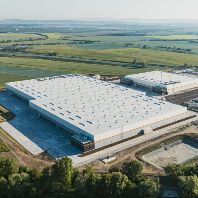
Lyon's metropolitan area hosts 77,860 jobs across 7,610 industrial establishments, representing 13% of all local employment, underscoring the sector's continued significance. The city's strategic position at the crossroads of major European freight corridors makes it an ideal logistics hub.
The USIN Lyon Parilly project exemplifies urban industrial innovation, offering 30,000 square meters of existing industrial premises with an additional 30,000 square meters opening in 2025. This model of integrating industrial activity within urban settings is creating new asset class opportunities that combine location advantages with sustainable development principles.
Cold storage, pharmaceutical logistics, and specialised biomanufacturing facilities represent particularly strong growth segments, driven by the concentration of life sciences companies and Lyon's role in European pharmaceutical supply chains.
Residential and Mixed-Use
Rental yields in Lyon average between 3-4%, with areas near universities achieving yields up to 5.5% when combined with tax-deferral schemes. The residential market benefits from structural undersupply, a growing student population across four universities, and sustained corporate hiring in high-value sectors.
The Confluence district represents Lyon's most ambitious mixed-use transformation, where historic industrial zones are being reimagined as integrated live-work-play communities. The area combines strategic location with modern amenities, creating a vibrant community with commercial and leisure facilities. Properties in Confluence command premium pricing due to waterfront positioning and contemporary design.
Student housing and co-living facilities represent undersupplied segments, with Lyon's 150,000+ student population creating sustained demand for quality accommodation near university campuses at Gerland, La Doua, and Jean Macé.
Investment Drivers and Market Dynamics
Several structural factors position Lyon as a top-tier European investment opportunity for 2025-2026:
Talent and Innovation Ecosystem: Lyon's concentration of universities, research institutes, and specialised training programs produces a highly skilled, multilingual workforce. Over 600 digital training programs alone demonstrate the city's commitment to developing talent for emerging sectors. This human capital advantage is a primary location factor for technology and life sciences companies.
Sustainable Development Leadership: Lyon's pioneering development plan includes ISO 20121 certification for venues, positioning it as the highest-ranked French city in the GDS-Index 2025. This sustainability focus is attracting ESG-conscious institutional investors and corporate tenants with net-zero commitments.
European Investment Support: The European Investment Bank backed Lyon-based biotech companies in 2024, including Fabentech, reflecting institutional confidence in the region's innovation potential. EU funding mechanisms provide grants, low-interest loans, and technical assistance that reduce investment risks and improve returns.
Price Discovery Advantage: Compared to Paris, Berlin, and Amsterdam, Lyon offers significant value with lower entry prices and stronger yield potential. The estimated median housing price in Lyon in 2026 is around €253,000, providing acquisition opportunities that generate attractive risk-adjusted returns.
Demographic Strength: Lyon's population growth, driven by internal migration from more expensive French cities and international talent attraction, ensures sustained occupational demand across asset classes. The city's quality of life, cultural amenities, and manageable cost of living make it increasingly attractive to young professionals and families.
Market Outlook and Risks
For 2025-2026, Lyon's commercial real estate market is projected to maintain stable growth of 3-5% across most sectors, with life sciences-related properties potentially exceeding this range due to sector-specific drivers. Transaction volumes are expected to increase as pricing stabilises and institutional capital seeks alternatives to overheated gateway markets.
The primary investment risks include potential oversupply in certain residential submarkets if development pipelines exceed absorption, exposure to France's complex regulatory environment, and sensitivity to national economic performance. However, Lyon's diversified economic base and structural growth drivers provide downside protection relative to single-industry cities.
Interest rate normalisation should benefit Lyon disproportionately, as more favourable financing conditions unlock value-add opportunities and support development economics. The city's relative affordability positions it to capture capital reallocation from premium European markets.
Conclusion
Lyon represents a compelling commercial real estate investment thesis for 2025-2026, combining structural growth drivers in high-value sectors, world-class infrastructure development, and attractive entry pricing relative to peer European markets. The convergence of life sciences innovation, digital transformation, and sustainable urban development is creating differentiated opportunities across office, industrial, residential, and mixed-use segments.
For investors seeking exposure to Europe's next generation of innovation hubs, Lyon offers the scale, sophistication, and growth trajectory typically associated with larger gateway cities, but with superior yields and more favourable risk-return profiles. As the city continues its transformation from regional centre to European life sciences capital, commercial real estate positioned to capture this evolution stands to deliver exceptional long-term value.
____
Photo by Pierre Ducher on Unsplash
Photo by Willian Justen de Vasconcellos on Unsplash