One of the Netherlands' most prestigious department store chains is pulling back from its global ambitions, signalling a broader shift in European luxury retail strategy that could reshape prime high street valuations across the Benelux region.
De Bijenkorf confirmed on Friday it will eliminate 167 positions, with 110 cuts affecting store staff and 57 at its headquarters, as part of what the company describes as a future-proofing strategy. The restructuring comes as the retailer scales back its international e-commerce operations to refocus on its core Dutch and Belgian markets, a move that raises questions about the long-term viability of its seven flagship properties occupying some of Europe's most expensive retail real estate. CEO Sean Hill stated the strategic focus is "on creating customer desire, local relevance, and an enriched shopping experience", emphasising in-store experience over international digital expansion, a pivot that suggests the company is betting on enhanced omnichannel integration within a concentrated geographic footprint rather than pursuing the broader European e-commerce model many luxury retailers have adopted.
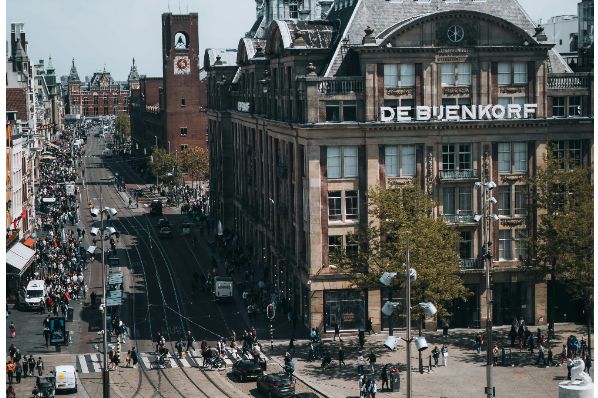
The decision has immediate implications for institutional investors holding assets in Amsterdam, The Hague, Rotterdam, Utrecht, Eindhoven, Maastricht and Amstelveen, where De Bijenkorf locations anchor premium shopping districts. With the retailer abandoning its international digital expansion, the company's ability to generate the turnover density required to justify current rental levels in trophy assets could face pressure, particularly as comparable luxury retailers increasingly blend physical and digital strategies across borders.
Labour unions FNV and CNV are actively challenging the cuts, whilst retail analysts suggest the company should leverage this moment to "roll out the golden carpet" for customers, returning to more exclusive service models and personalisation to differentiate itself in an increasingly competitive luxury market.
For developers and investors, the strategic retreat raises a critical question that has received little attention: if premium department stores are consolidating rather than expanding internationally, what does this mean for the pipeline of mixed-use schemes being designed around anchor retail tenants? The shift suggests a recalibration of risk for projects banking on international retail brands to drive footfall, particularly in secondary cities where De Bijenkorf's pullback could signal broader sector caution.
All seven physical stores remain operational with no closures announced in this restructuring phase, but the company's pivot away from international growth marks a notable departure from the expansion narrative that has underpinned retail real estate valuations in recent years.
People mentioned:
• Sean Hill, CEO, De Bijenkorf
Companies mentioned:
• De Bijenkorf, department store chain
• FNV, labour union
• CNV, labour union
Image: Photo by Renate Dreyer on Unsplash