After years spent simply rebuilding room counts, Poland's hotel sector has quietly shifted into a different kind of growth, one measured less in how many hotels open and more in how good they are. Demand keeps climbing, operating performance keeps improving, and the projects now breaking ground are bigger and more ambitious than anything the market has delivered before. "Polish hotel market is maturing, and competitive advantage is now driven more by quality than by quantity," says Katarzyna Tencza, Transaction Director at Walter Herz.
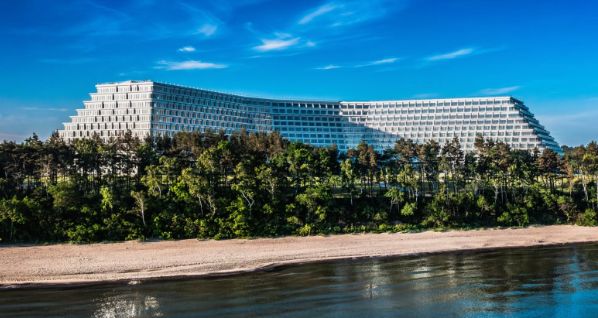
The numbers tell a market gathering scale. More than 2,600 hotels now operate across Poland, with almost 50 added in 2025 alone and total bed capacity climbing 4.3 per cent year-on-year to 334,700, a market that has expanded by roughly 42 per cent since 2015. International brands are digging in deeper too: as of March 2026, 263 hotels across the country carried the flag of 58 brands from 17 global chains. But the real story is size. Hotel Gołębiewski in Pobierowo opened this year with around 1,200 rooms, one of the largest single hotel investments Poland has ever seen, while in Warsaw the former Gromada Lotnisko Hotel has been reborn as the 390-room Campanile PRIME and Première Classe Warsaw Airport complex.
Warsaw remains the region's undisputed heavyweight, with over 19,200 rooms and 5.5 per cent supply growth in 2025, the strongest of any major Central and Eastern European city, and a pipeline stacked with Canopy by Hilton, AC by Marriott Port Praski, Staycity Aparthotel, Cloud One, Holiday Inn Express and a JW Marriott-branded redevelopment of the Regent Hotel. Cracow, meanwhile, is arguably the more interesting story for investors: after absorbing roughly 2,000 new rooms between 2021 and 2024, occupancy there overtook Warsaw's for the first time since 2019, and a thin 2026 supply pipeline should keep performance climbing further. Gdańsk's Tri-City posted the country's highest average hotel rates in 2025, with Renaissance, Golden Tulip, Radisson Blu, Swissôtel and Q Hotel Plus set to add over 1,000 rooms in the years ahead. Wrocław tells the opposite story: the fastest-growing city by room count also became the only major CEE market to post declining occupancy and RevPAR in 2025, a cautionary tale in how quickly oversupply can erode returns.
Here is the detail investors should not skim past: despite all that development activity, Poland's hotel investment market changed hands to the tune of just €135m across 12 transactions in 2025. That is not a demand problem; it is a supply problem. "The relatively low volume of hotel investment transactions does not reflect a lack of investor demand, but rather the limited availability of investment-grade hotel assets currently offered for sale," the report notes. For capital that cannot find product to buy, the logical next move is to fund what does not yet exist, through forward funding, joint ventures and development partnerships, rather than waiting for a resale market that may not loosen up for years.
Renovation is emerging as the other route into the market. Rather than building from scratch, investors are repositioning well-located assets, exemplified by the former Hotel Tychy & Tychy Prime relaunching as B&B Hotel Tychy, the Cracow-bound Royal Hotel returning as Le Méridien, and the Warsaw Regent's conversion under JW Marriott. "One of the most visible trends in the sector is the growing number of refurbishments, redevelopments, and rebranding of existing properties. Investors are increasingly leveraging well-located assets, adapting them to current market standards instead of developing entirely new projects. Repositioning has become just as important a source of new hotel supply as new developments. The upcoming years will belong to projects delivered under strong international brands as well as conversion projects," says Katarzyna Tencza.
Looking ahead, the sector's next chapter will be written by recovering business travel, the rise of bleisure trips and Poland's growing pull as a coolcation destination, even as an ageing domestic population pushes operators to court international visitors and senior travellers more deliberately. "In 2026, continued growth in demand is expected across the hotel market. A key factor supporting the sector will be the recovery of business travel, the expansion of bleisure trips, and growing interest in Poland as a destination aligned with the coolcation trend. Over the longer term, demographic changes will remain a challenge, requiring both more effective strategies for attracting international visitors and adapting the offer to the growing senior traveller segment," she adds.
People mentioned:
- Katarzyna Tencza – Transaction Director, Walter Herz
Companies mentioned:
- Walter Herz – Polish commercial real estate advisory firm
Image: Hotel Gołębiewski
Get the latest commercial real estate news, investment insights, and property trends from Europe Real Estate, trusted by professionals since 1999.
Sign up for free weekly updates. Join here