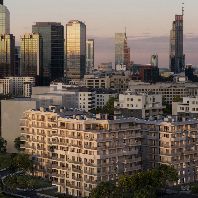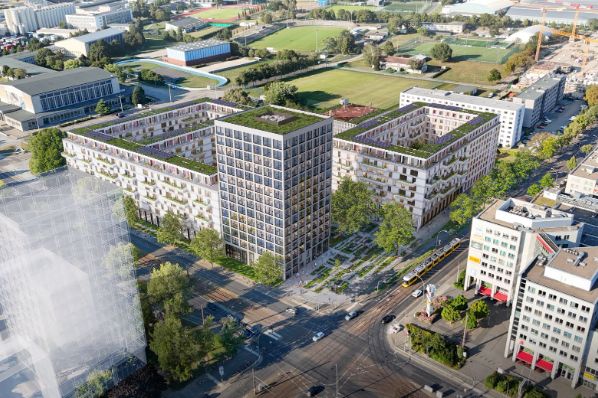
The site carries the weight of modern history. Once home to the Sporthotel Hohenschönhausen, built in the 1960s to house GDR elite athletes and expanded into a congress centre in the 1980s, it fell vacant after reunification and became one of eastern Berlin's most recognisable derelict landmarks. Adjacent to the Sportforum Berlin and served directly by tram lines M5, M6, and M13, with S-Bahn access at Landsberger Allee, its physical infrastructure belies decades of inactivity, making the activation of this site all the more striking.
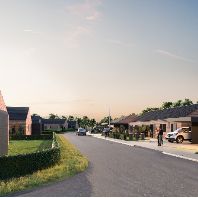
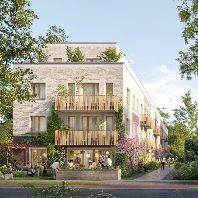
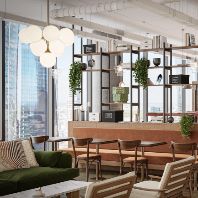
The planned mixed-use quarter will deliver approximately 700 residential units alongside around 15,000 m² of commercial gross floor area, incorporating retail for daily needs, daycare, medical services, and community uses. Eighty per cent of the total gross floor area will be residential and transferred to a state-owned housing company upon completion. This build-to-transfer structure is a detail that will sharpen the attention of institutional investors: it offers developers a clearly defined exit with near-guaranteed offtake, a model gaining traction across Germany's most supply-constrained cities. The zoning process remains ongoing, with construction targeted for 2027, subject to planning approval.
"This property is unique in many ways – due to its size, location, and history. Above all, because it has stood unused for decades, shaping the urban landscape as a ruin. We are pleased that we can now turn this location into a sustainable and tangible development. Our focus is to responsibly transform complex Berlin sites into projects that serve the city in the long term,"
said Florian Lanz, Managing Director of LABORGH Investment GmbH.
"We are delighted to further develop this prominent site together with LABORGH and make a tangible contribution to Berlin's urgently needed housing supply. A location that lay idle for decades will once again become an active part of the city: at least 70,000 square meters of gross floor area will be created – 80 percent of which will be residential and transferred to a state-owned housing company. This is urban responsibility in practice,"
added Dr. Simon Kempf, Managing Director of Periskop Development GmbH.
For developers and capital allocators watching Berlin's land market, the transaction signals a broader strategic shift: complex, historically encumbered brownfield sites, long considered too difficult or politically sensitive to unlock, are now firmly in play. With Periskop Development retaining its role in the ongoing planning process under a joint development partnership, the deal structure also illustrates how specialist advisory-led site activation can bridge the gap between derelict land and institutional-grade residential delivery, a model that is likely to be replicated as Berlin's developable land supply tightens further.
People mentioned
- Florian Lanz, Managing Director, LABORGH Investment GmbH
- Dr. Simon Kempf, Managing Director, Periskop Development GmbH
Companies mentioned
- LABORGH Investment GmbH, acquirer and developer of the Weißenseer Weg 51 site, Berlin
- Periskop Development GmbH, development advisor to the vendor and co-development partner on the ongoing zoning process
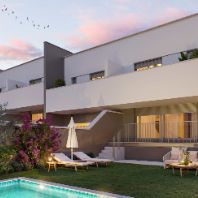
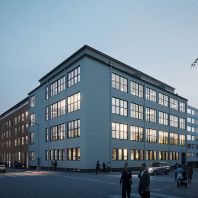
Image Source: Visualisation of the planned development at Weißenseer Weg 51, Berlin-Lichtenberg. Copyright: Periskop Development.