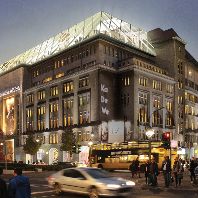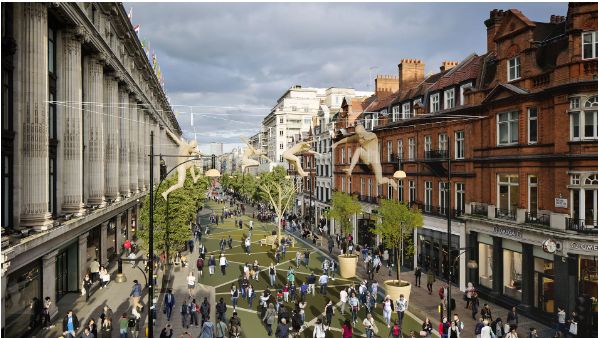
London, UK: After decades of false starts stretching back to a tram proposal first floated in 2004, London's most famous shopping street is finally going car-free. Mayor of London Sir Sadiq Khan has confirmed that a near one-kilometre stretch of Oxford Street, between Orchard Street near Selfridges and Great Portland Street, will become permanently pedestrianised from Monday 26 October 2026, banning private cars, buses, taxis, private hire vehicles, cycles, e-scooters and pedicabs from the zone, with servicing vehicles restricted to midnight to 7am and emergency vehicles always permitted.
The timing is deliberate. "I'm excited to see my bold vision for Oxford Street coming to life," Khan said, framing the launch date as timed for just before the peak Christmas trading period on a street that draws around half a million visitors daily. The scheme marks the first phase delivered through a Mayoral Development Corporation, with the newly established Oxford Street Development Corporation overseeing implementation and new cycleways, planters and seating areas planned to replace the former traffic lanes.
For retail investors and developers, the financial structure behind this scheme is the detail worth watching closely. The first phase costs approximately €176m, funded entirely through borrowing, against which the Greater London Authority estimates the pedestrianisation could generate up to €47m in VAT receipts and a further €23m in business rates. That is a public body deliberately leveraging debt against projected footfall-driven retail spending uplift, a financing model that, if it delivers anywhere close to forecast, offers a genuinely replicable template for other European cities weighing whether pedestrianisation of major retail arteries can pay for itself through rates and tax uplift rather than relying solely on grant funding.
Not everyone is convinced the transition will be smooth. Westminster City Council deputy leader Tim Barnes said residents and businesses "still have a long list of unanswered questions about how it will work," with the council warning that displaced traffic could be pushed onto smaller surrounding streets, creating knock-on economic and environmental effects for occupiers on those secondary routes, a genuine consideration for landlords with frontage on the streets now absorbing diverted vehicle flow.
The current scope covers only part of the Mayor's original ambition. When first proposed in 2016 and again detailed in 2017 before Westminster City Council withdrew support, plans envisioned pedestrianisation stretching from Marble Arch to Tottenham Court Road. The Oxford Street Development Corporation has indicated the scheme may extend further in future phases, though no confirmed timeline exists beyond the initial October launch, leaving landlords along the wider corridor watching closely for signals on whether and when their own frontages might be affected next.
With one of Europe's busiest shopping streets going permanently traffic-free for the first time, the coming months will offer a genuine real-world test of whether reduced vehicle access translates into the retail footfall and rental growth London's pedestrianisation advocates have long promised.
People and companies mentioned
- Sir Sadiq Khan, Mayor of London
- Tim Barnes, Deputy Leader, Westminster City Council
- Westminster City Council, local authority overseeing part of the affected area
- Oxford Street Development Corporation, Mayoral Development Corporation delivering the scheme
- Greater London Authority, public body estimating the scheme's financial benefits
Image Source: Mayor of London Office
Get the latest commercial real estate news, investment insights, and property trends from Europe Real Estate, trusted by professionals since 1999.
Sign up for free weekly updates. Join here