European retail is not experiencing a uniform decline, it is being pulled apart at the seams. Retail and consumer goods remains the most distressed corporate sector in Europe, and according to PwC UK, the underlying dynamic is structural: a polarisation of the consumer wallet in which the middle market is being hollowed out at striking speed while value-driven formats and highly specific, functional niches absorb what spend remains. Today's shopper, PwC UK notes, brings a spreadsheet rather than an impulse to the till, a shift that is reshaping which retail categories, and by extension which retail real estate formats, survive the next twelve months.
Where the pressure is worst
- Mid-tier specialty fashion – trapped between discounters' price-floor leverage and luxury's emotional equity
- Consumer electronics – hit hardest by the "return squeeze", rising logistics and processing costs eating into thin margins
- Home and furniture – suffering sharp drops in purchase intentions as households defer big-ticket spending
- Traditional hypermarkets – losing share as shoppers abandon the single large weekly shop
Each of these categories is being squeezed by the same three forces at once: the middle-market trap, the return squeeze, and a wave of discretionary deferral as households protect core energy and grocery budgets ahead of anything discretionary.
Where retail is holding its ground
- Hard discount and off-price – more than 45% of European households are now actively hunting for private labels and deep promotions
- Proximity and convenience retail – shoppers are visiting an average of 3.5 distinct chains a month, favouring walking-distance stores over the big weekly shop
- Functional health and wellness – strong growth in "nutritional efficiency" lines, high-protein, fresh and wellness products where spend still feels justified
- Resale and re-commerce – capturing spend redirected away from full-price mid-market fashion
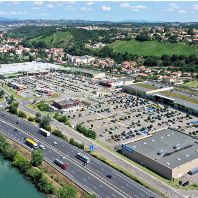
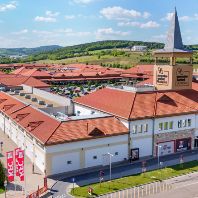
What has gone largely unaddressed in this narrative is what it means for the physical retail estate itself. If proximity, convenience and click-and-collect formats are both projected to grow more than 5% this year, directly at the expense of massive multi-category department and hypermarket formats, landlords and developers face a repositioning decision that is arguably more urgent than the category data alone suggests. Big-box space built for a single dominant weekly shop is structurally mismatched to a shopper now running 3.5 tactical missions a month, while small-format proximity units, urban dark stores and last-mile fulfilment space embedded within high streets are becoming the more investable asset class, a shift in underlying real estate demand that the consumer-spending headlines alone do not capture.
This quarter's growing casualty list
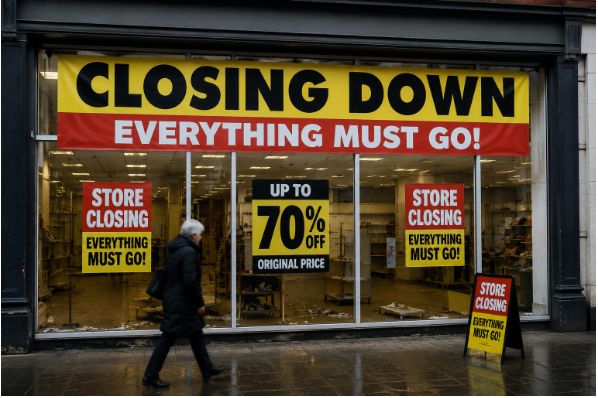
The list keeps expanding, and the newest name landed just two days ago. Belgian fashion chain Paprika, a plus-size womenswear specialist trading in sizes 42 to 54, was declared bankrupt on 8 July 2026, closing its remaining 30 stores and costing 151 jobs. The retailer had already closed every store in the Netherlands and Germany, and had spent since March in judicial reorganisation under new owner Futura Capital Fund before no buyer emerged, a sequence that shows even a post-restructuring, downsized mid-market fashion business can still run out of road.
- Claire's – accessories retailer owned by Modella Capital, closed all UK standalone stores by April 2026, around 1,300 job losses
- Quiz – fast-fashion chain, entered administration 5 February 2026, its third insolvency in six years, completed the wind-down of all 37 remaining standalone stores by end of June
- Gandys – lifestyle e-commerce brand co-founded by Rob and Paul Forkan, built on FSC-certified natural rubber flip-flops, a 10% profit-to-charity model and Royal Family patronage, went into administration in April 2026, a reminder that strong sustainability credentials and celebrity favour are not, by themselves, enough to offset a single-store, largely online model exposed to the same cost pressures squeezing everyone else
- Routledges – Carlisle bakery chain trading since 1917 across 109 stores, went into liquidation citing cost inflation, with operating costs alone set to rise by more than €93,300 (£80,000) year-on-year from minimum wage, business rate and energy increases
- Leading Labels – 15-store discount fashion chain owned by Baaj Capital, stores ranging from 464 to 1,022 m², went into liquidation in early June after 33 years of trading
- Paprika – Belgian plus-size womenswear chain, declared bankrupt 8 July 2026, 30 stores closed, 151 jobs lost
Behind these individual failures sits a deeper structural shift flagged by Forrester: the death of the frictionless return. Years of free, universal returns underwrote digital-first and mid-market fashion conversion, but with UK minimum wage climbing to £12.71 per hour (approximately €14.83) and labour costs indexing upward across the continent, that model no longer clears its own margin, pushing retailers toward machine learning to ration generous return terms to their most profitable customers. Even value-conscious shoppers are not abandoning quality altogether; as McKinsey observes, many are practising "strategic splicing", buying private-label staples from hard discounters to fund small, deliberate indulgences elsewhere. For retailers, and their landlords, still positioned in the middle, that dual-speed consumer is not a phase to wait out, it is the new baseline.
Companies mentioned:
- PwC UK – Source of retail wallet polarisation analysis
- Forrester – Source of returns policy and labour cost analysis
- McKinsey – Source of consumer "strategic splicing" analysis
- Claire's – Accessories retailer, entered administration
- Quiz – Fast-fashion retailer, entered administration
- Gandys – Lifestyle e-commerce brand, entered administration
- Routledges – Carlisle bakery chain, entered liquidation
- Leading Labels – Discount fashion chain, entered liquidation
- Paprika – Belgian plus-size fashion chain, declared bankrupt
- Modella Capital – Owner of Claire's
- Baaj Capital – Owner of Leading Labels
- Futura Capital Fund – Luxembourg-based owner of Paprika's parent company, CPBE
Image: Generated for illustration purposes only