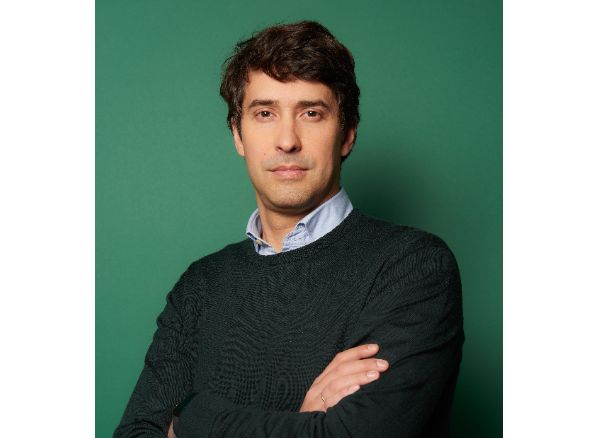
Javier Martin is Southern Europe Retail Leasing Director at Eurofund Group, the pan-European investor, developer and manager behind the "Shopping Resort" model, with more than 800,000m² of retail space across Spain, Portugal, the UK, Germany and Italy. He joined the group in September 2020 as Leasing Director Iberia, after leasing and asset management roles at intu and CBRE, where he oversaw leasing and management of centres including Marineda City and Puerto Venecia. He holds a Master's in Real Estate Asset Management from IE Business School and an economics degree from the Complutense University of Madrid. Interviewed at MAPIC in Cannes, he explains why leasing now starts at acquisition, why flexibility has become the new currency with tenants, and why hospitals, citizen services and post offices are moving into shopping centres.
1. Retail has been transformed by online shopping, changing consumer expectations and new leisure habits. What makes physical retail destinations relevant today, and what will set successful ones apart over the next five years?
I think the COVID period represents a step-change in the world of retail destinations. Extended forced lockdowns confirmed that physical retail was no longer a necessity. When the world re-opened, both landlords and retailers needed to give people a reason to visit their stores and destinations. We see a destination as a place where everybody in a family, around the table at breakfast, can decide to go, so it has to offer something for everyone.
What we are seeing is that it is no longer only retail and F&B. We are also bringing in essential services, such as healthcare, diagnostics and administrative services. Getting the right mix of uses is essential to the success of any destination, and we spend a lot of time defining these uses and bringing them into our assets. At the same time, retailers want better locations, so we are also balancing how to create value with bigger stores. The main thing is understanding what tenants and customers need, with services, leisure, retail and F&B all together, and adapting our offer to that demand.
2. How has the approach to leasing evolved?
The first thing is to be close to the retailers. We treat tenants as partners, not from a client versus landlord perspective. If we can find the right balance between what the tenant is asking for and what we have for them, that is best for everyone. We want to develop our assets hand in hand with tenants, unlike the typical landlord who makes decisions at a table in the office and then goes to market to tell retailers what is available. That is totally different.
In my role, leasing is involved from the very beginning of an acquisition. My job is to understand what tenants are asking for, so that decisions on the asset, from acquisition through management, are based on retailer demand.
The other key word is flexibility, starting with the contract. Mandatory periods are changing a lot. It is now difficult to find tenants signing for ten years, or even five to eight. They may start with two or three years, or with a pop-up concept that later moves into a long-term one. We also need to consider alternative operating arrangements such as turnover rents, which can be the right model in certain circumstances and provides both incentives and flexibility for both parties.
Oasiz Madrid Shopping Mall

3. Beyond traditional shopping centres, where do you see the biggest opportunities for innovation, and which formats have the greatest growth potential in Europe?
In Madrid, for example, we are working on a completely different concept, with much more open space and common areas dedicated to guests. It is not only about units, rents and tenancies, but also about what is happening in the asset day after day: events, marketing, experiences.
Retailers and F&B brands are generally innovative and fast-moving, so we need to be ready for them. As landlords, we also need to ask how we can improve the customer journey, and not only through visibility and wayfinding. Visitors need to find that something different is happening every time they come, so the visit is not simply a repetition. It is not just a transaction.
4. What are brands looking for today when choosing physical locations?
Brand awareness is key. It is well known that brands like Inditex do not spend money on advertising. Their own stores are their publicity, and many tenants are moving in that direction. Brands such as Mango invest heavily, not only in the fit-out but in the customer experience.
We are moving from physical to more emotional stores, and we need to be ready for that. The next step for the market is how we share data between retailers and landlords. It is not just a transaction. It is about how we work together, using the data we both hold, to improve future performance and the experience for customers.
5. Europe Real Estate has long argued that shopping centres will evolve into city-style metropolises, offering far more than retail. Are you seeing this shift, and which non-retail services and uses are now coming into your centres?
Yes, we are experiencing exactly that at NUGA Castellana in Madrid, a completely mixed concept where offices, residential, retail and F&B come together. People need to spend their time in the most efficient way.
One example coming to market is medical concepts inside shopping malls. Hospitals in Spain are very busy, and they are looking at what a shopping centre can offer. They do not want to invest in F&B or in entertaining patients in a waiting room, so they come to the shopping centre, focus on the medical service, and we provide the environment. Many Spanish hospitals are now exploring satellite concepts in shopping centres to relieve pressure and move some services out.
It is not only medical. In Portugal, there is a concept where people handle administrative tasks, such as renewing a passport, inside the shopping centre, and in France we are looking at an asset with postal services inside. The aim is to bring people in so they can spend their time more efficiently with us.
____________________________________________________________
EUROFUND GROUP
Linkedin: Javier Martin
Interviewed by: Ilona Klevansky Taillade
____________________________________________________________
Companies and organisations
- Eurofund Group, Pan European investor, developer and manager of shopping resorts; more than 800,000m² of retail space across Spain, Portugal, the UK, Germany and Italy; employer of Javier Martin
- CBRE, global real estate adviser; former employer of Javier Martin
- intu, former UK shopping centre owner; former employer of Javier Martin
- IE Business School, Madrid business school; Javier Martin's Master's in Real Estate Asset Management
- Complutense University of Madrid, Spanish university; Javier Martin's economics degree
- Inditex, Spanish fashion retailer; cited as a brand that relies on its own stores for brand awareness
- Mango, Spanish fashion retailer; cited for investment in customer experience
- MAPIC, international retail property event in Cannes; location of the interview
- UBBO, Eurofund Group's shopping resort in Lisbon; includes an integrated private hospital
- NUGA Castellana, Eurofund Group's mixed-use centre in Madrid combining offices, residential, retail and F&B