In a small industrial park outside the town of Dummerstorf, a decision has just been made that could reshape where Europe's digital infrastructure calls home. Schwarz Group, the retail and IT conglomerate behind Lidl and Kaufland, has announced plans to invest up to €5.6bn by 2033 in a new data centre in Mecklenburg-Vorpommern, a project state leaders are already framing as a turning point for Germany's ambitions to control its own digital future rather than depend on foreign cloud providers.
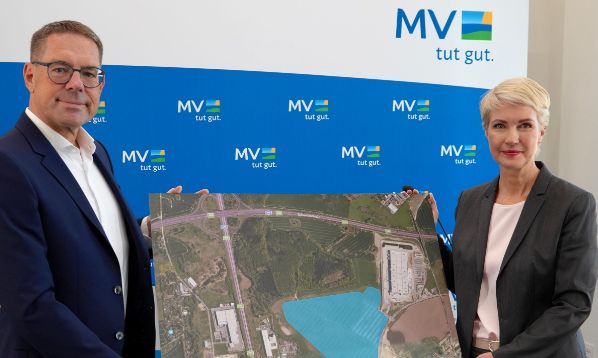
The announcement was made jointly by Gerd Chrzanowski, general partner of Schwarz Group, and Manuela Schwesig, minister-president of Mecklenburg-Vorpommern, at a press conference positioning the state as a sovereign digital hub for Europe. "Digital sovereignty is not created by appeals or speeches. It is created by action, by reliable infrastructure, and by practical applications. We are not waiting for others to lead. We are assuming entrepreneurial responsibility and investing sustainably in the future of Germany as an economic location," said Chrzanowski. Schwesig framed the stakes in similarly direct terms: "The goal of the state government is to become more independent from foreign providers of data centers and cloud and AI applications. We therefore view the Schwarz Group's investment decision as an opportunity for greater independence and increased data security. Our state will benefit from this investment in many ways."
For investors and developers tracking Europe's data centre boom, the detail worth watching closely is the grid strategy rather than the headline capacity figure. The facility is expected to reach 240 megawatts by 2033, but the site has been selected specifically for its ability to connect to the 380-kilovolt extra-high-voltage grid, a technical advantage that keeps transmission losses and grid fees down as capacity scales, and which Schwarz Digits says creates a realistic pathway to a full 1 gigawatt grid connection by 2045. In a market where power availability, not construction cost, has become the binding constraint on new data centre development across Europe, securing extra-high-voltage access this early positions the project well ahead of competitors still queuing for grid capacity elsewhere.
Sustainability is built into the site selection rather than added afterwards. Northern Germany's high availability of onshore and offshore wind power will supply the facility, while the region's climate supports efficient free cooling using ambient air. A letter of intent has already been signed with Rostock's public utility to channel the data centre's waste heat into municipal district heating planning, echoing a similar district heating agreement Schwarz Group recently signed for its data centre project in Lübbenau, Brandenburg, and suggesting a repeatable model the group intends to apply across future sites.
The partnership extends well beyond infrastructure into public administration. By the end of 2026, Mecklenburg-Vorpommern's state government plans to roll out digital building permits on the sovereign cloud platform STACKIT and introduce OpenDesk, starting with secure, fully managed teacher workstations in schools, both developed jointly with Schwarz Digits. The state government describes the wider cooperation as a scalable blueprint intended not only to modernise Mecklenburg-Vorpommern but to serve as a model for digital administration across the whole of Germany.
The Dummerstorf project remains at an early stage, with technical specifications for cloud and AI microchip configurations still to be finalised and the development subject to standard approvals. Even so, the scale of ambition, a data centre investment measured in billions of euros tied directly to national digital sovereignty policy, marks one of the clearest signals yet that Germany's states are competing hard to become the physical backbone of Europe's AI and cloud economy.
People mentioned
- Gerd Chrzanowski, General Partner, Schwarz Group
- Manuela Schwesig, Minister-President, Mecklenburg-Vorpommern
IMAGE: Gerd Chrzanowski, general partner, Schwarz Group, and Manuela Schwesig, minister-president of Mecklenburg-Vorpommern
Source: © Schwarz Corporate Affairs
Companies mentioned
- Schwarz Group, German retail and IT conglomerate investing up to €5.6bn in the Dummerstorf data centre
- Schwarz Digits, IT and digital division of Schwarz Group leading the sovereign cloud and AI infrastructure build
Get the latest commercial real estate news, investment insights, and property trends from Europe Real Estate, trusted by professionals since 1999.
Sign up for free weekly updates. Join here